
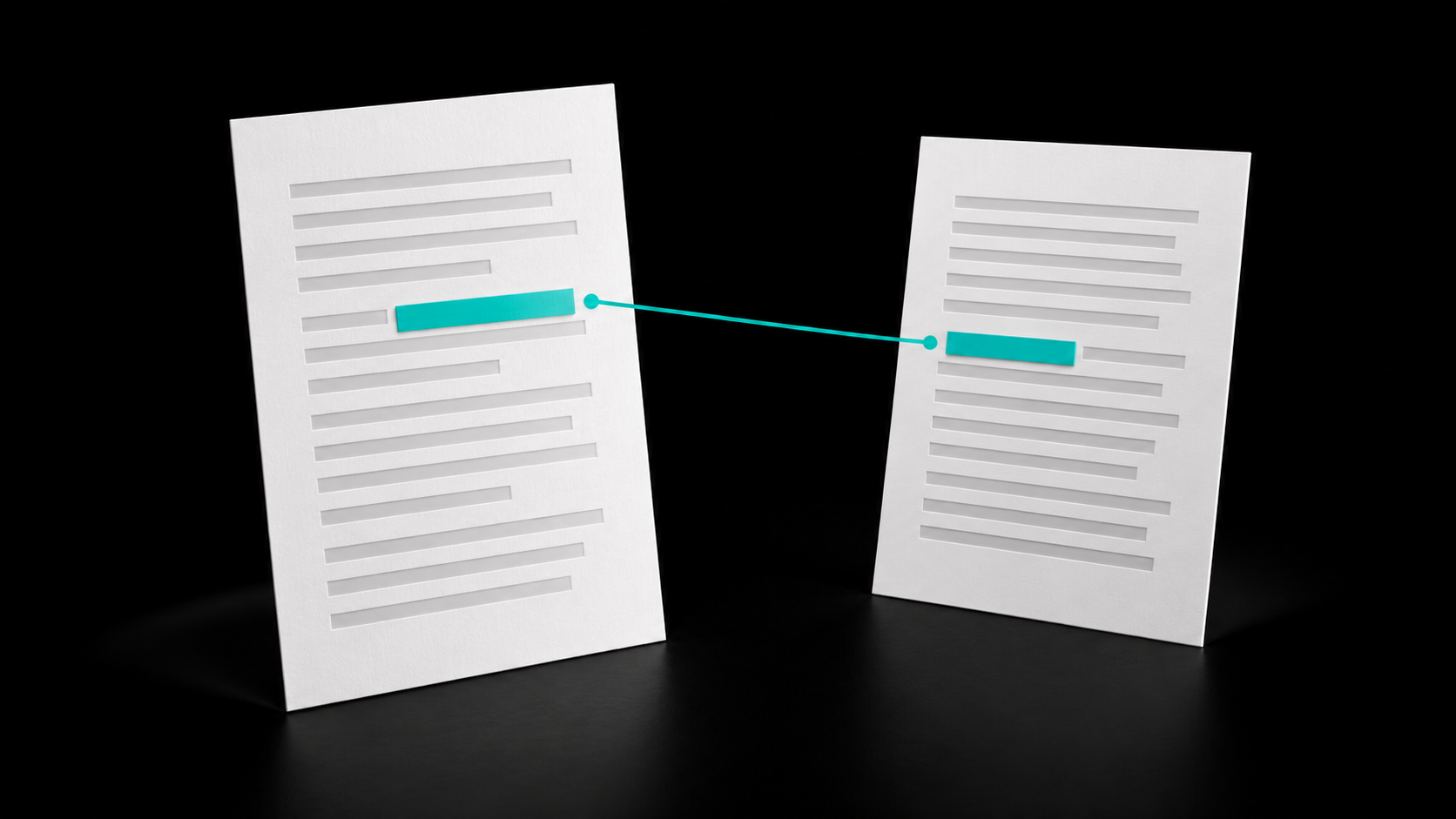
A business brief recommends a software platform because it “reduces operating costs across the whole organization.” A citation points to a real vendor case study. Open it, however, and the evidence concerns faster document preparation in one team, not organization-wide cost reduction.
This is an illustrative example. The source exists, but the recommendation has travelled further than the evidence. Checking that a link works would miss the problem.
AI-assisted research needs a claim-level review before it influences a decision. The useful question is: what, exactly, does this source allow us to say?
In my AI-for-business workshop material, I distinguish language models from search engines and emphasize context and reference material in prompting. A practical extension is to separate finding a source from establishing that it supports a claim. Supplying references improves the conditions for useful work; it does not remove the need to inspect how they were used.
Start with the sentence that could change the decision
Do not begin by counting references. Identify the statements that carry the recommendation: a product capability, a cost assumption, an eligibility condition, a claimed business result or a deadline.
Split compound statements. “The platform supports Arabic, works offline and meets our retention requirements” contains three claims. A source may support one while saying nothing about the others. Put each beside its own evidence rather than allowing one footnote to imply support for the whole sentence.
Review consequential claims first. A background description may tolerate a short summary. A statement used to approve a purchase, change a policy or make a public promise needs enough support for that particular decision. If specialist interpretation is necessary, route the claim to someone qualified to make it.
Check existence, support and applicability separately
A useful review has three distinct tests.
Existence: Can the reviewer open the original source and identify its publisher, title and relevant version? A search-result snippet or an AI-generated reference list is a route to the evidence, not the evidence itself. If the original cannot be accessed, label the claim unverified rather than quietly treating the snippet as a full review.
Support: Does a specific passage, table or documented observation establish the statement as written? Read the surrounding qualifications. Watch for changes from “may” to “will,” from a pilot to a general result, from a feature announcement to current availability, or from reported experience to independently measured evidence.
Applicability: Does the evidence fit the decision's product version, plan, population, geography and time period? A genuine source can be irrelevant to the proposed use. Record the mismatch rather than relying on the publisher's reputation to bridge it.
NIST's Generative AI Profile describes the risk of erroneous outputs and fabricated citations. Its suggested action MS-2.5-003 calls for checking sources and citations during pre-deployment assessment and ongoing monitoring. The three tests here are a practical review approach, not a claim that NIST prescribes this exact checklist or that it establishes compliance.
Keep reported evidence separate from your inference
Return to the opening example. A defensible note might say: “The vendor reports faster document preparation in one customer team. Whether that would reduce our operating costs remains untested.”
That wording preserves the useful observation without converting it into a financial forecast. It also reveals the next question: would the proposed workflow release usable capacity, reduce expenditure, improve quality or simply move work elsewhere?
Use explicit labels when the distinction matters:
Source reports: What the original publisher actually states, including material limitations.
Our interpretation: What the team infers from that statement and why the inference seems reasonable.
Still to verify: What additional evidence is required before relying on the interpretation.
An inference can be valuable. Hiding it inside an apparently sourced fact prevents colleagues from challenging the assumption. This is especially important when using research to test the assumptions in an AI business case.
Ask for a small claim-to-source record
For the few claims that matter, keep a compact record with the exact draft claim, original source link, supporting location, material qualification, reviewer and review date. Add a disposition: supported as written, revise, or unresolved.
A location should help another person find the evidence: a page and section, a table title, or a named heading on a web page. Retain only the short excerpt needed for the review, subject to confidentiality, permissions and copyright. Do not upload whole private documents merely to fill a checklist.
For a capability claim, the record might read: “Offline access is unresolved. The documentation reviewed describes desktop access but does not establish operation without an internet connection. Obtain an authoritative answer or test the required scenario before recommending offline use.” This is an illustrative review note, not a finding about a named product.
Absence of evidence in one document does not prove a capability is absent. It means the current citation cannot support the claim. That distinction prevents an overconfident correction from replacing the original overconfident answer.
Check independence and currentness before adding more links
Several articles can repeat the same press release or study. They may add commentary, but they do not necessarily provide several independent observations. Trace important claims back to the original evidence and note when multiple references share that origin.
Separate the publication date, the period studied and the date you accessed the source. A recently updated web page can still describe an older experiment. An older source can remain useful for a stable concept while being inadequate for current pricing or availability.
When sources disagree, keep the disagreement visible. Check definitions, versions, methods and scope before choosing a preferred conclusion. If those differences cannot be resolved, present the competing evidence and explain what remains undecided. The same discipline applies when preserving disagreement in AI summaries.
Use AI to assist the review, not certify itself
A practical instruction is: “For each decision-relevant claim, identify the original source and the passage that supports it. State any scope limitation. Distinguish the source's finding from your inference. If you cannot access or locate the evidence, mark the claim unresolved. Do not invent a citation.”
Then open the important sources yourself, or assign that review to a competent colleague. Asking a second model can help identify questions to investigate, but agreement between generated answers does not establish that either checked the original. Verify passages against the actual documents and avoid treating an AI-produced quotation as an original excerpt until matched.
Close the review by revising unsupported wording, narrowing the recommendation or obtaining the missing evidence. For high-consequence decisions, leave the decision open when the unresolved claim is essential. More polished prose is not a reason to approve it.
If your team uses AI to prepare recommendations or executive briefs, schedule a consultation to connect research practices with review responsibilities. A useful citation should let the next person retrace the reasoning, see its limits and understand why the proposed action follows.